Week of the 10/5/2026 - #41
Contents
science
- AI Mathematics progress
tech
- Build a $40 WiFi e-reader
- More DIY audio projects
- Watt: the lean desktop project
- Sega Genesis trackers
art
- Poster prompts
- Encyclopædia Britannica
AI Mathematics progress
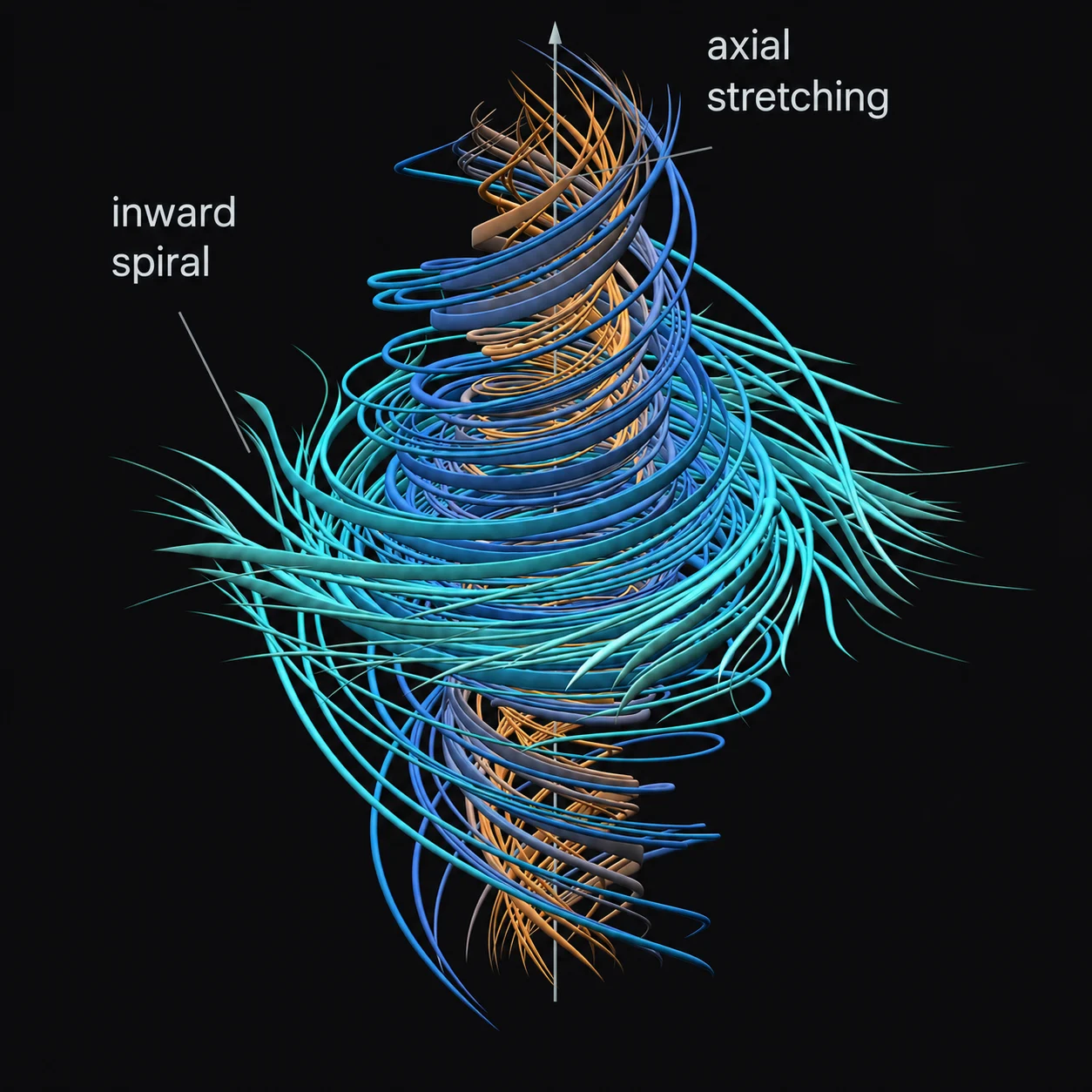
This is past couple of months there have been interesting developments in proving mathematical theorems using AI. Most notably where two events: in September 2026, OpenAI announced a proposed proof on the existenca and smoothness problem in the Navier-Stokes theorem. Although not yet officially verified by the broader mathematics community or accepted by the Clay Mathematics Institute. There are of course controverises and issues with the proof but it is nontheless an interesting application. The second event happened this week where again, OpenAI, released a Github repository with over +370 articles proving mathematical propositions from almost all fields in mathmatics. Here are some links to this information and things I found interesting regarding this. In addition, in May the “unit distance conjecture”, one of Erdös’s problems was solved by AI.
Navier-Stokes milliennium problem
- On the Navier–Stokes Millennium Prize Problem - The official OpenAI announcement and description of the problem and their results.
- PDF of the original paper
- How Terry Tao Became an Evangelist for AI in Math - An article in Quanta Magazine about computer assisted proofs. “With automated proof-checkers, a problem can be broken up into small chunks, solved bit-by-bit, then reassembled with confidence that every piece is correct. For some, this heralds a new area in mathematical research.”
- Terry Tao’s blog - “Updates on my research and expository papers, discussion of open problems, and other maths-related topics. By Terence Tao”. A great source of information related to computer assited mathematics.
Erdős problems
- Erdös problems - Lately there have been several AI assisted proofs of some of Erdös conjectures. This site has a lot of information on all of the propositions, including what it says, it’s current status, etc. This page has the list of all propositions and their current status.
- Erdős problems in the OpenAI proofs talks about the problems that appear in this weeks OpenAI publication. From the post: “On Tuesday 6th October, OpenAI released a github repository containing 372 significant proof claims in mathematics; most of them (claiming to) solve or make significant progress for important problems from across pure mathematics. This includes many Erdős problems. In this blog post I will, for the convenience of others, list the claims relevant to this site, and give some very brief remarks. Please use the comments to this blog post for a general discussion on this release.”
- The unit distance conjecture solved by OpenAI - one of Erdös’s problems was solved by AI in May 2026: “The unit distance problem asks for the maximum number of pairs of points at unit distance among n points in the plane. The best known upper bound is O(n^(4/3)), and the best known lower bound is n^(1+c/log log n) for some constant c>0. The problem was posed by Paul Erdős in 1946, and has been a central problem in combinatorial geometry ever since. In May 2026, OpenAI announced that they had solved the problem using a combination of machine learning and traditional mathematical techniques.”
The statement of the problem is straightforward:
Let (u(n)) be the largest possible number of unit-distance pairs among (n) points in the plane. Examples attaining linear growth rate are easy to construct: placing (n) points in a line gives (n - 1) pairs, while a square grid gives about (2n) pairs. The previously best known construction, coming from a rescaled square grid, turns out to give even more: (n^{1 + C / \log \log n}) for a constant (C). Since (\log \log n) tends to infinity with (n), the additional term in the exponent tends to (0), meaning these constructions achieve growth only slightly faster than linear. For decades, it was widely believed that this rate was essentially the best possible, and no construction could improve significantly over the square grid. In technical terms, Erdős conjectured an upper bound of (n^{1+o(1)}) in which the additional (o(1)) indicates a term tending to (0) with (n). Our new result disproves this conjecture. More precisely, for infinitely many values of (n), the proof constructs configurations of (n) points with at least (n^{1+\delta}) unit-distance pairs, for some fixed exponent (\delta > 0).
+370 math articles
- Github repo with +370 mathematics papers - “This repository contains mathematical manuscripts and supporting proof artifacts produced by an internal OpenAI model.”
- Mathematics manuscript collection - Manuscript map: each result description is followed by its constituent manuscripts and their abstracts. Paper titles link directly to PDFs.
-
Regular trajectories, pruning and quantum parity - In the list there are a couple of Quantum circuit related propositions. This is one of them that might be interesting to re-visit. Abstract: “We prove that constant-depth quantum circuits with arbitrary one-qubit gates and unbounded-arity Toffoli gates cannot compute parity with any fixed positive worst-case advantage using polynomially many total qubits. Ancillary qubits are initialized to ( 0⟩), one output qubit is measured, and all other final registers may be discarded without restriction. This resolves Moore’s parity conjecture in the measured-output model.” - Exact quantum factoring over a fixed finite gate set - This is the most interesting to me since it’s a problem I’ve worked on. It claims: “We give a polynomial-time uniform quantum circuit family that outputs the complete prime factorization of every integer N ≥ 2 with probability one. A fixed finite set of bounded-arity gates suffices, and both the gate count and the number of qubits have polynomial worst-case bounds in the input length.”
Other related proofs
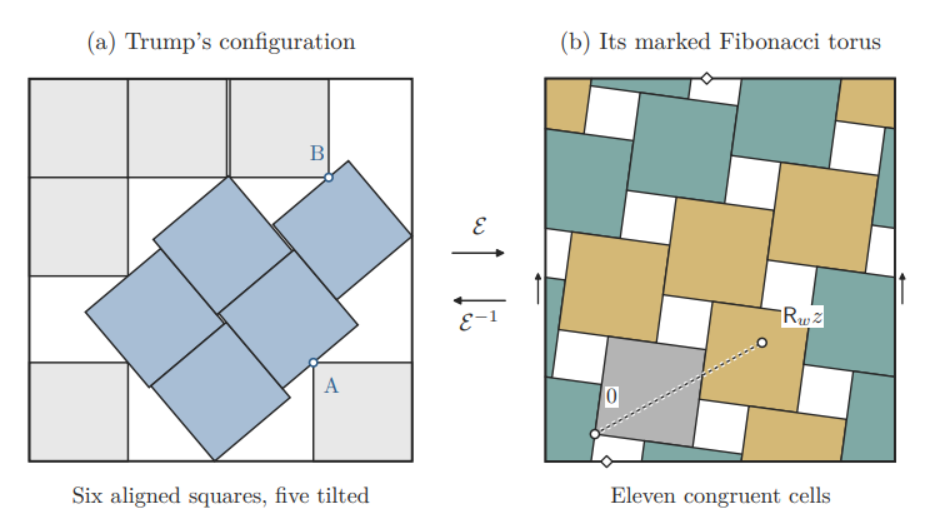
- Astra and Claude Credited on Lean Proof of 11-Square Packing - “A GitHub repository called 11SquaresFormalized went up on October 6, with all 7,920 of its local Lean modules verifying and zero admissions in the final audit. The claim: that the arrangement of eleven unit squares inside a larger square that Walter Trump found in 1979, side length roughly 3.87708359002281, really is the smallest one possible.”
- The problem: try to pack 11 unit length squares inside a larger square in the tightest possible way. The solution was found in 1979 by Walter Trump, but it took until 2026 to formally verify the proof using Lean.
- The arrangement found by Water Trump in 1979 and it’s key points:
- The Side Length ((s)): The enclosing square has a minimum side length of (\approx 3.877084). This exact boundary is defined by a root of a degree-8 polynomial ((s \approx 3.87708359…)).
- The Arrangement: The solution is highly non-intuitive. Instead of aligning all pieces straight, it contains six axis-aligned squares and a rigid block of five tilted squares.
- The Tilt Angle: The five tilted squares are not turned at an obvious (45^{\circ }) angle; they are strictly rotated at approximately (40.181937^{\circ }) relative to the outer borders.
- Rigidity: The layout is completely rigid, meaning there is zero room to slide or shift the individual unit squares to shrink the outer border any further. Even in this perfect configuration, only about 73% of the large square’s area is filled, leaving the rest as unavoidable empty space.
- The fibonacci geometry of eleven squares - This paper seems to find a transformation that changes the convoluted soution into a more harmonious one. The paper is very hard to follow so I’m not really sure that’s what it does. I want to revisit it.
- A Chiral aperiodic polygon with fibonacci monodromy - This paper desribes a 27-gon aperiodic chirial monotile. It is different than the now famous “Hat” monotile in that it does not require to include both left and right versions of the tile. There already exists a chiral aperiodic monotile called “Spectre” so I’m not sure what is the difference advantge of this one. See here for more information regarding the “spectre”
Related links
- TactileJS - A Javascript library for representing, manipulating, and drawing periodic tilings of the plane.
- Frag - A simple 2D fragment shader viewer, inspired by Shadertoy
- Personal page of Craig S. Kaplan - One of the creator of the ‘hat’ monotile.
- The blog og Dave Smith - The blog of Dave Smith is one of the creator of the ‘hat’ monotile.
- Cool apps for tiling - This directory has a loooot of Javascripts apps to test tilings. It was created by Arnaud Chéritat
Build a $40 WiFi e-reader
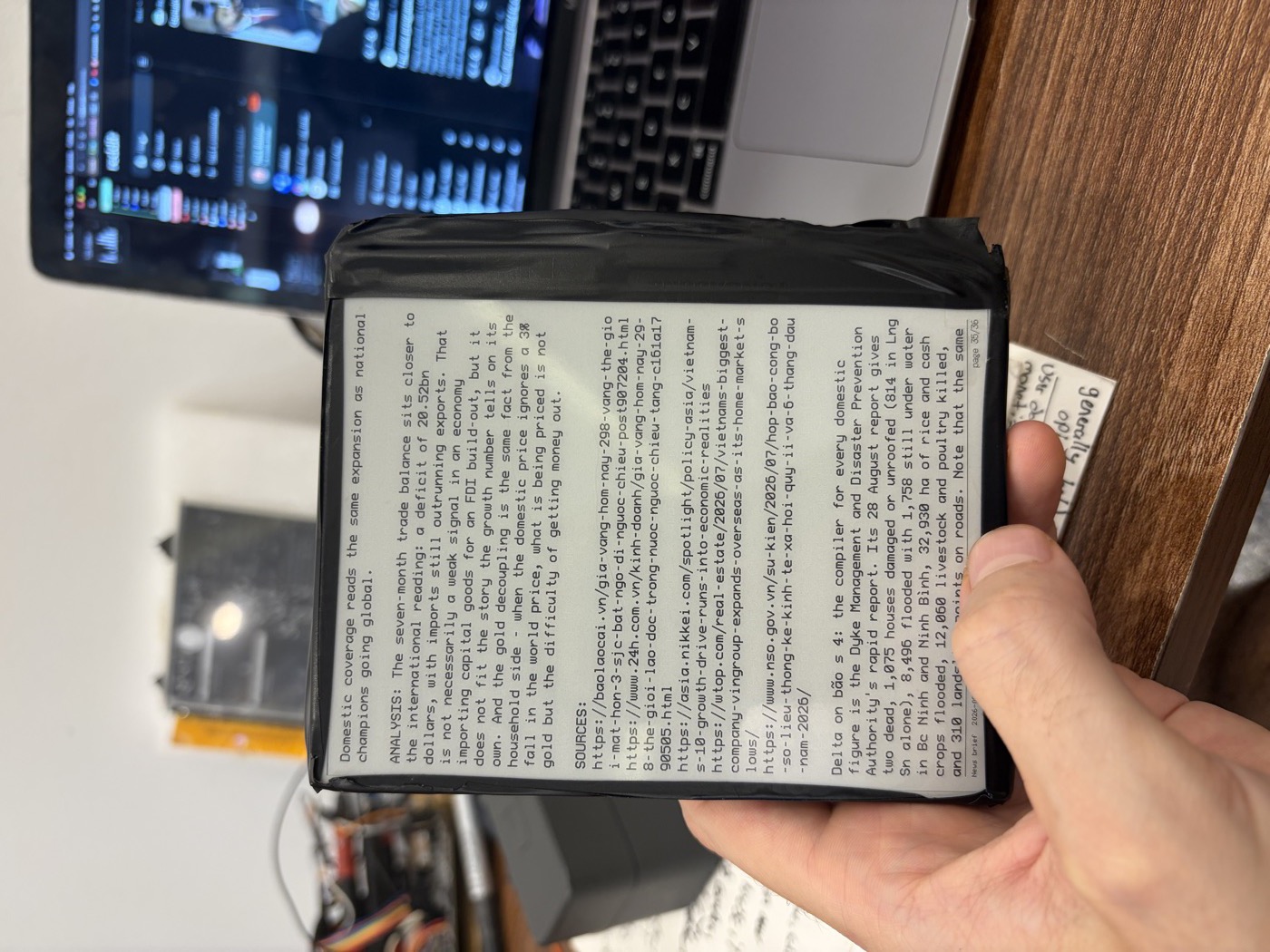
An ESP32-S3, an e-paper panel, five buttons, and a scheduled agent that writes the morning brief. Roughly $40 in parts and a weekend.
- Github repo - Open source ESP32-S3 e-reader with a 5.76 inch e-paper panel, a Game Boy and NES game server for your phone, and a live Pokemon companion dashboard on the e-ink.
More DIY audio projects
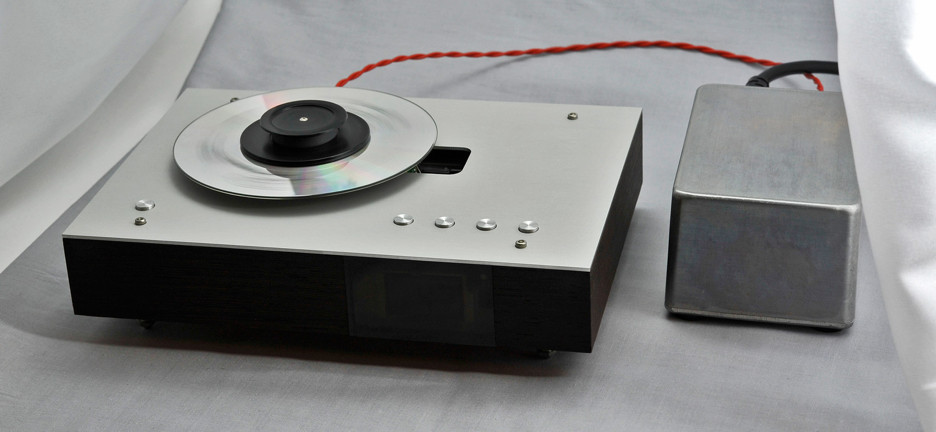
Here are some more beautiful DIY audio projects I found.
- CD Transport - Here’s a CD Transport project that was inspired by Shigaraki player. In depth discussion can be found here: https://www.diyaudio.com/forums/audio-sector/160373-cd-transport.html
-
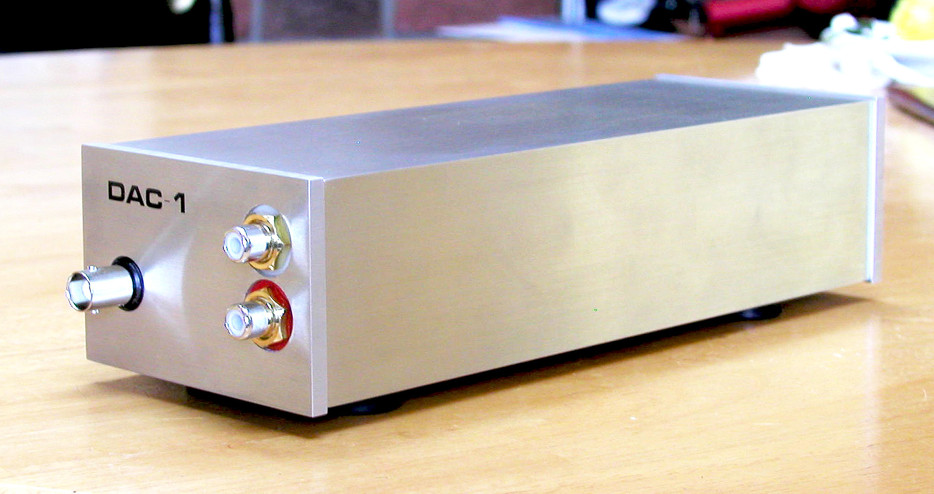
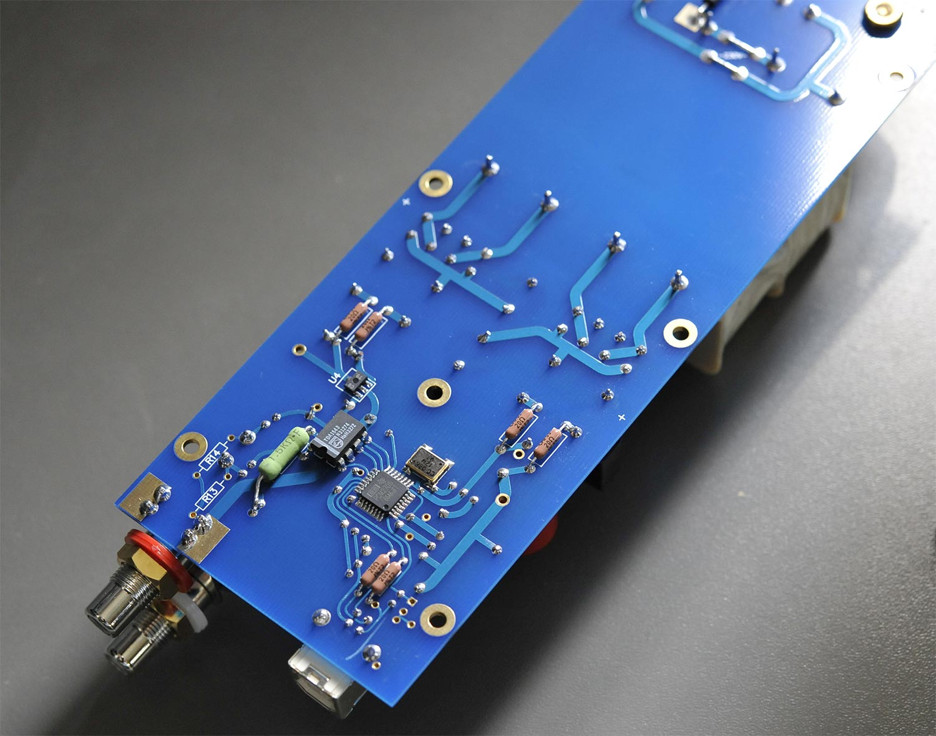
SPDIF and USB DAC - The SPDIF DAC has been around since 2005 and there are few reviews on 6moons, most recent one here: http://www.6moons.com/audioreviews/a…e5/system.html
-
DIY community forum - A forum for DIY audio projects and DIY audio gear.
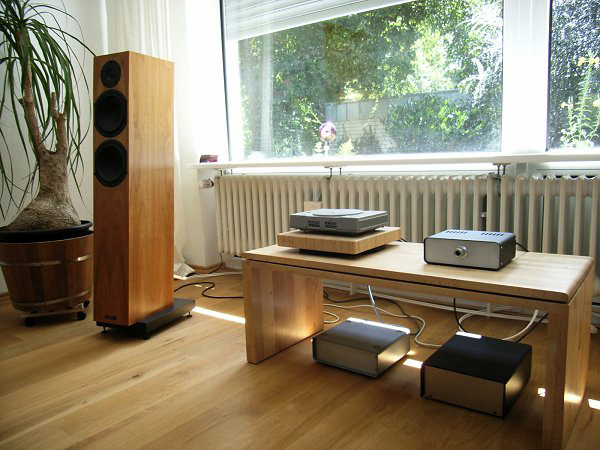
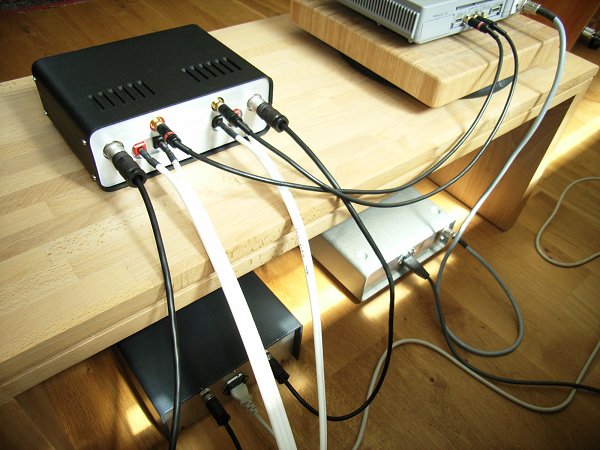
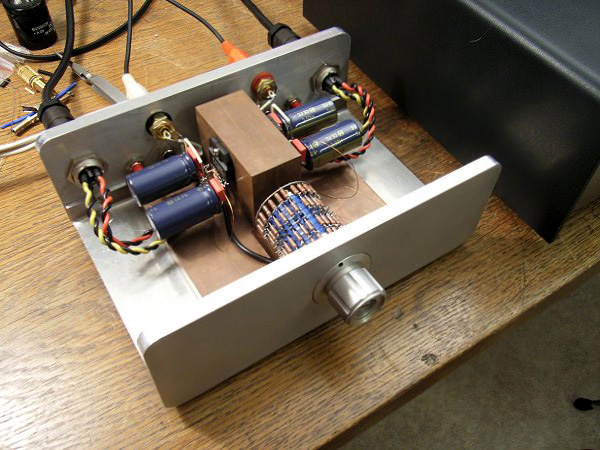
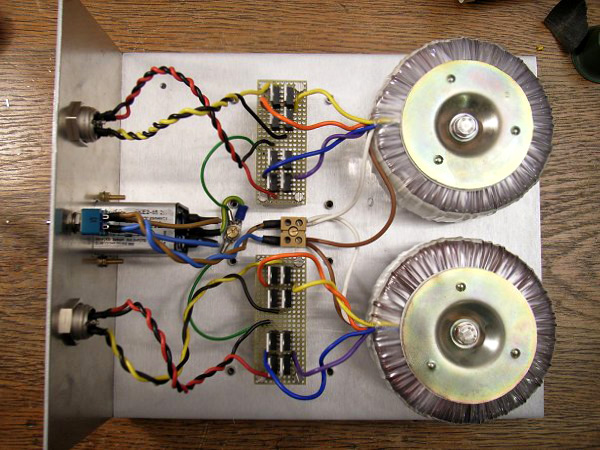
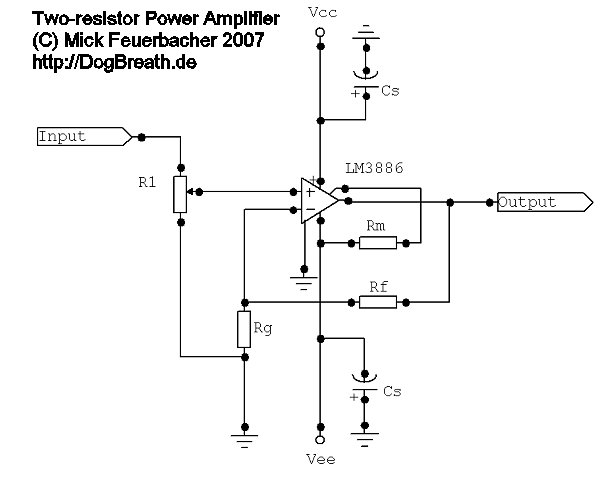
- Minimal modular amplifiers - This guy builds minimal amplifiers without a PCB. In this project the AMP is based on the LM3886 chip and he builds a separate power supply. The complete amp, without power supply, only uses 4 resistors, two caps and an LM3886 amplifier chip (per channel)!
Poster prompts
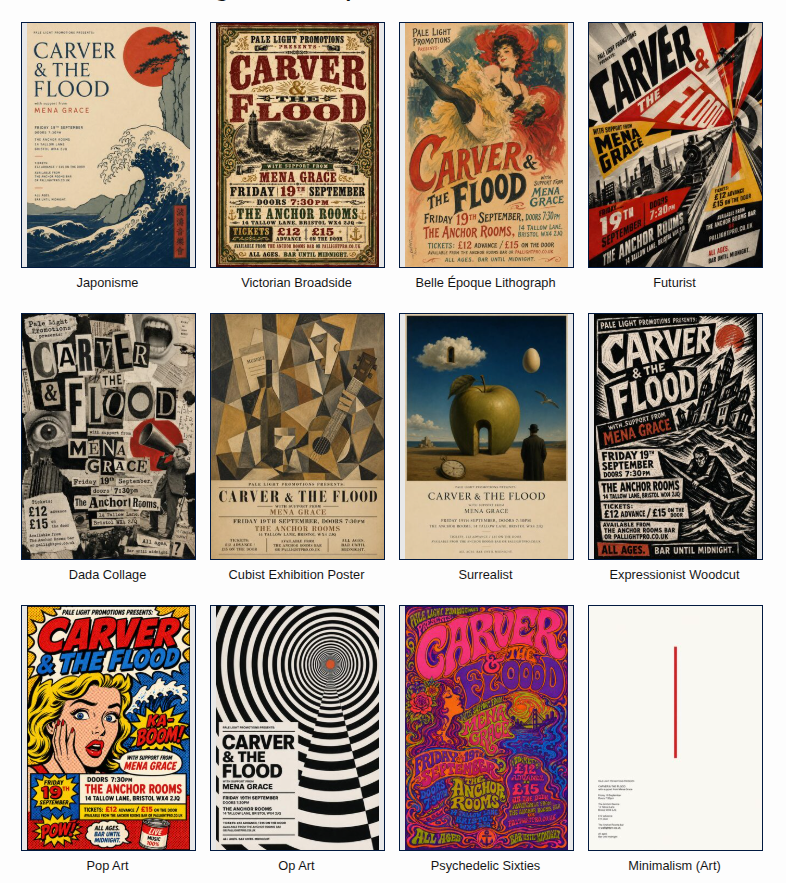
One hundred design styles as copy-paste prompts for ChatGPT image generation. Each page shows the prompt alongside an example of what it produces — for two events: a village fête and a music gig.
Some look great in my opinion. Some still look like slop, but with some tweaking they could be fixed for a specific event. In aggregate, they demonstrate the breadth of style available. I recognise that almost all of the styles are entirely inappropriate for a village fête. The point is to demonstrate what you can do for any event, and to show that you can ask for whatever style you want.
- Poster Prompts - Turns out ChatGPT can generate better art if you prompt it correctly. This site helps you give accurate prompts to get different styles.
Watt: the lean desktop project
The premise is simple: idle should mean idle. Every wakeup, every poll, every fork on a timer is a watt the battery doesn’t give back. Two sister suites grew out of pulling on that thread — CHasm in pure x86_64 assembly that paints the pixels and reads the keys, and Fe2O3 in Rust on a shared TUI foundation that does mail, files, calendars, charts, and the rest. Together they form a complete Linux desktop that costs under three watts to sit still with the screen on, about a day on a single charge. Pick a door.
- Watt website - The main site
- Geir Isene Github page - The author of the two repos.
- Nomad - The Android companion - The mobile half of the Fe2O3 suite. One Rust core, seventeen Kotlin / Compose apps, synced over Syncthing, with no Google account and no cloud middleman.
Encyclopædia Britannica
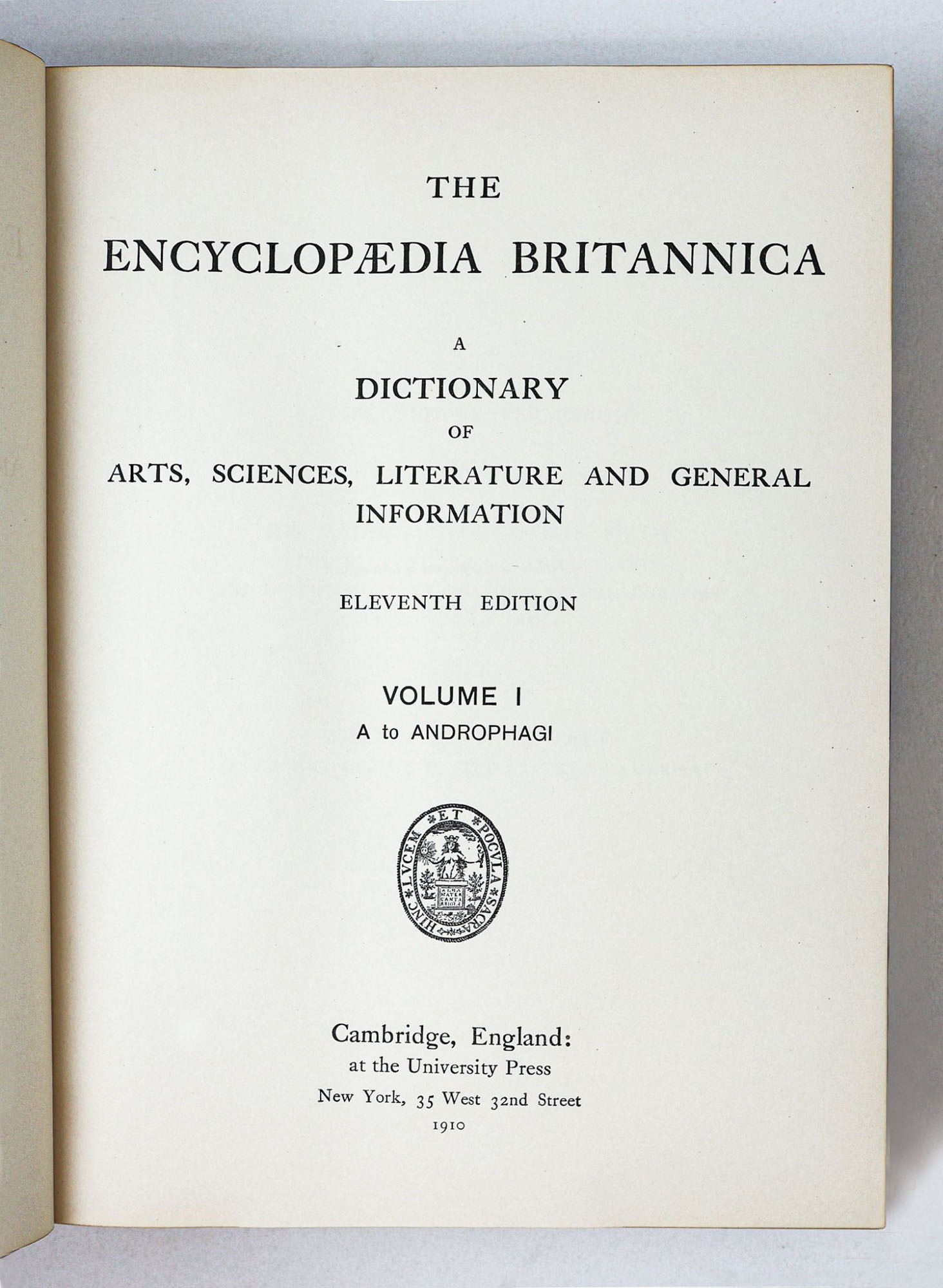
This site has the eleventh edition of the Encyclopædia Britannica (1910-1911).
- Site with the Encyclopaedia - You can browse all articles with the text and a photograph of the page.
- Download the content - You can download the
.mdcontent of all articles. You can also by an ebook version.
Sega Genesis trackers & other links
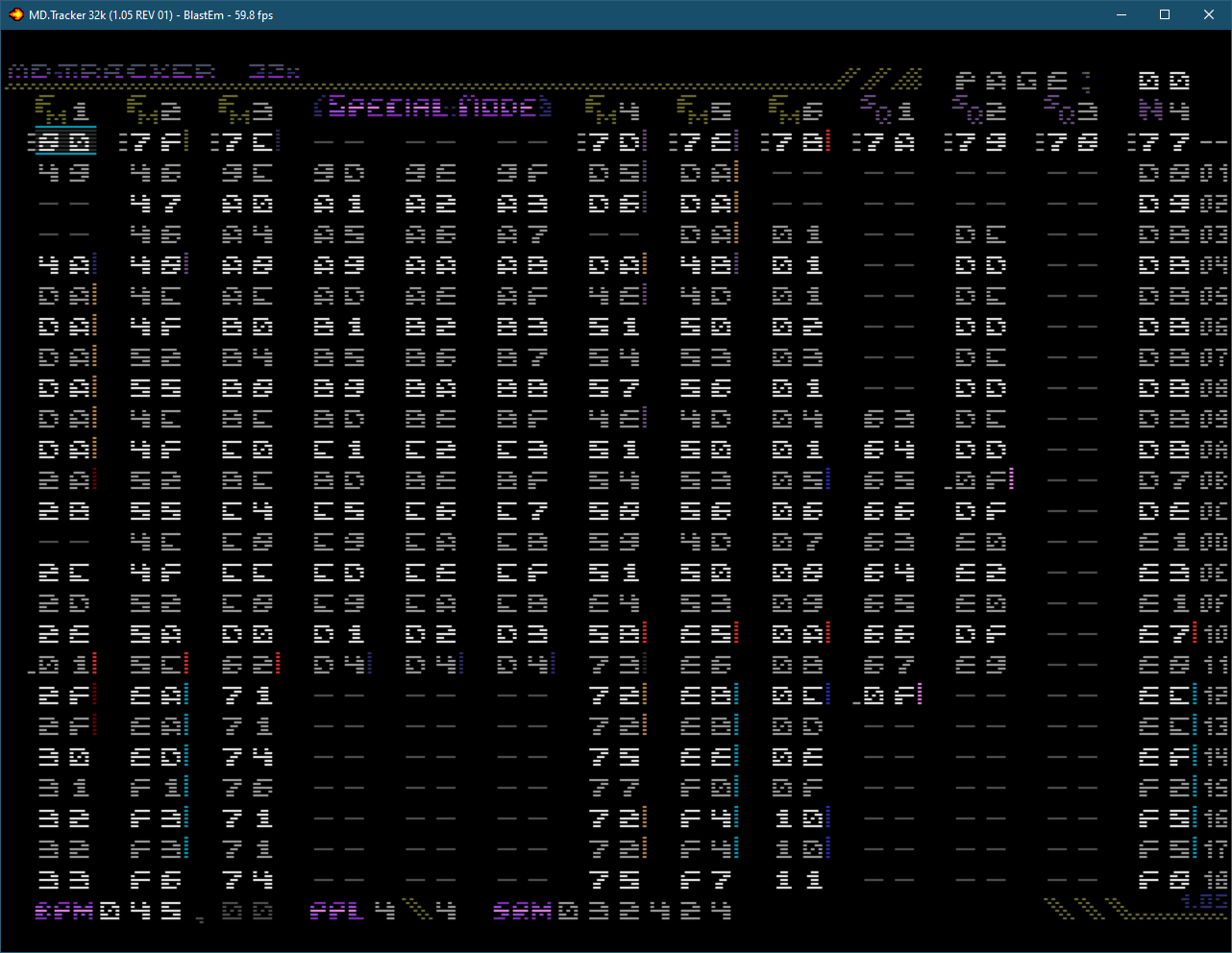
Here are two cool looking native trackers for the Sega Genesis.
- MD.Tracker - Native music tracker for SEGA MEGA DRIVE / GENESIS / NOMAD
-
genmddj - An LSDJ-inspired music tracker for the Sega Mega Drive / Genesis, driving the YM2612 FM synthesiser (6 × 4-operator + an 8-bit PCM DAC) and the SN76489 PSG (3 squares + noise), written in 68000 + Z80 assembly. It’s a sibling project to SMSGGDJ, little-scale’s Sega Master System / Game Gear music tracker.
- Sega Genesis/Mega Drive VDP Graphics Guide v1.2a (03/14/17) - A nice writeup of the Sega Genesis VDP.
- Retro game dev blog - Some nice articles related to retro game development.